On the border of Peru and Bolivia is Lake Titicaca, a navigable lake at the highest elevation of the world. On the Bolivian side, you access the lake through the town of Copacabana. An hour and a half boat ride will bring you to Isla del Sol or Island of the Sun. The roads are steep there and no cars are polluting the air. I initially planned for a day trip and then bus-ride to my next destination later that day. With bus schedule only allowed an hour on the island, I changed my plan and stayed a night there. During the 1st evening, I hiked around the island, passing a few small Inca ruins along the way. The view from the island was wonderful from all sides albeit a bit windy at the top. Although it was cloudy, the sunset was still beautiful.
SunsetSunrise
March 3, 2018
The next day, I walked over to the side of the island where mostly locals live. I sat atop of a rock for the whole morning, watching locals tend to their animals and plant, their daily routines. The calmness and serene environment made a perfect morning. Suddenly, a llama was running around the fields alone and a few steps behind was a local woman. The llama put up quite a chase but in the end, got caught by his owner who didn’t seem too pleased about the situation. Also, because the island has many steep climbs, donkeys, which I had not seen for the duration of my travels, were everywhere. On the docking area, there seemed to be as many donkeys as there were people, bringing products either back from the city or heading to the city.
If more time allowed, it would have been nice to visit Isla de la Luna, another boat ride away. The calm felt on the island is like no other place, especially well appreciated after spending the few days in La Paz.
Like many big cities, traffic is a major issue. La Paz is no different. What was supposed to be an 11 hour bus ride turned into a 13 hour ride. It was also very easy to know we had arrived or at least were making our way to the city. Looking out through the window, you would see smog, grey clouds of pollution, and if lucky a small opening in the polluted air could be seen a somewhat blue sky.
After the night bus to La Paz, I allowed myself 2 whole days in the city. After checking in to the hostel, I headed out to the San Francisco church nearby. The big space in front of it was filled with people. I booked a walking city tour for the afternoon and asked the lady what was happening. She told me there was a blood drive happening. I thought to myself, wow that’s an amazing turn out. I soon found out however, that it was no blood drive. It was the gathering point for a protest happening a bit later. I was not sure what the protest was about but I noticed that most participants were indigenous women, all wearing traditional dresses and most carrying babies on their back.
Baby llamas hanging in a store in the infamous witches market
The walking tour was very interesting and definitely a must in the bustling city. My favourite part was the story of San Pedro prison. Around 10 years ago, tourists could have the chance of visiting inside the prison. It was never an official tour, but got to be known through word of mouth. Inmates would be the tour guides. Somehow, it was rated as the #1 thing to do in La Paz according to the Lonely Planet. As the story goes, an inmate was giving a tour when another confronted him. The inmate giving the tour left the group of tourists so they tried to get out on their own and very soon lost their way. The guard didn’t remember a tour was going on and the tourists stayed wandering in the prison for 3 days. The tourists finally got out through the involvement of their embassies. Since then, only people holding Bolivian ID are allowed inside. Another fun fact was that the Coca-cola company held a monopoly in the prison for food delivery. The government did not provide food (illegal but it’s South America) and no company wanted to be seen doing business with a prison. Coca-Cola saw it as just another business opportunity. Nowadays, every Saturday, there is a Coca-Cola truck parked in front. There are many other stories to the prison just as entertaining, which makes it very easy to understand why it’s a popular tourist spot.
Mar 1, 2018
My second day in La Paz was a full day tour down the infamous Death Road, or Yungus Road, on mountain bike. The 1st part of the biking was on paved road, just to get acclimated to the bike. It was pouring and freezing cold during this part. Finally, the real mountain biking and fun began in the 2nd part. The whole part is downhill, giving the best adrenaline rush for those brave enough to go fast. I was very cautious at first, going slowly to avoid bumps and rocks. Letting that fear go made for the best and funnest ride. I was soon going down full speed, bouncing on the shocks constantly. The road, being on the edge of the jungle, is also in a completely different climate. Even though it was foggy that day, it did not take away the beauty of the green plants and waterfalls covering every inch of the mountains. The day ended at a hotel in the jungle for lunch, a swim and an amazing hot shower before a 4-hour ride back to the city.
I did some packing before an early bed time for a morning bus ride to Copacabana, where I would continue on a boat to Isla del Sol.
Sucre is known for it’s abundance of Spanish schools throughout the city. I had previously planned on staying a shorter time. Everyone I talked to along the way said La Paz, my next destination, wasn’t very nice and it was just any other big city. For this reason, I cut my time in La Paz to stay longer in Sucre. In the next 5 days, I took 4 hours of Spanish class per day with a wonderful teacher named Cecilia. It definitely helped widen my vocabulary.
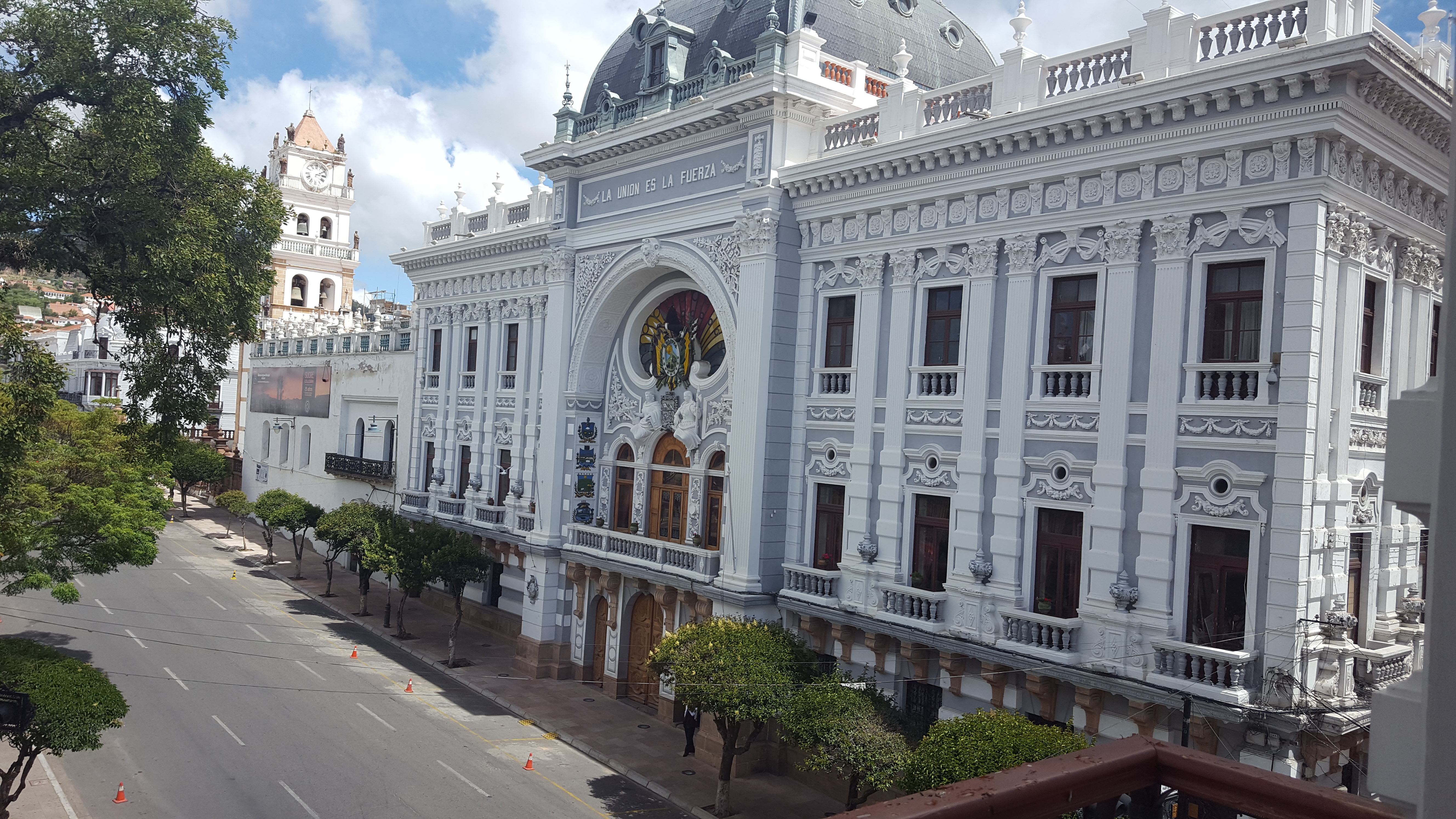
In the afternoons, I walked around the city and visited museums. I visited the central market where so much fruit, vegetables and meat could be found. I had my first lunch on the top floor of the market. The stalls were all selling the same meal. Whenever one woman yelled out the available food, all the other women chimed in as well, making it seemed like a chorus. Sucre is also known as the white city because all the buildings are white. It has many colonial buildings making the city a nice place for any architecture fanatic.
El Castillo de la Glorietta with the army base across the bridgeParrot in the palm tree
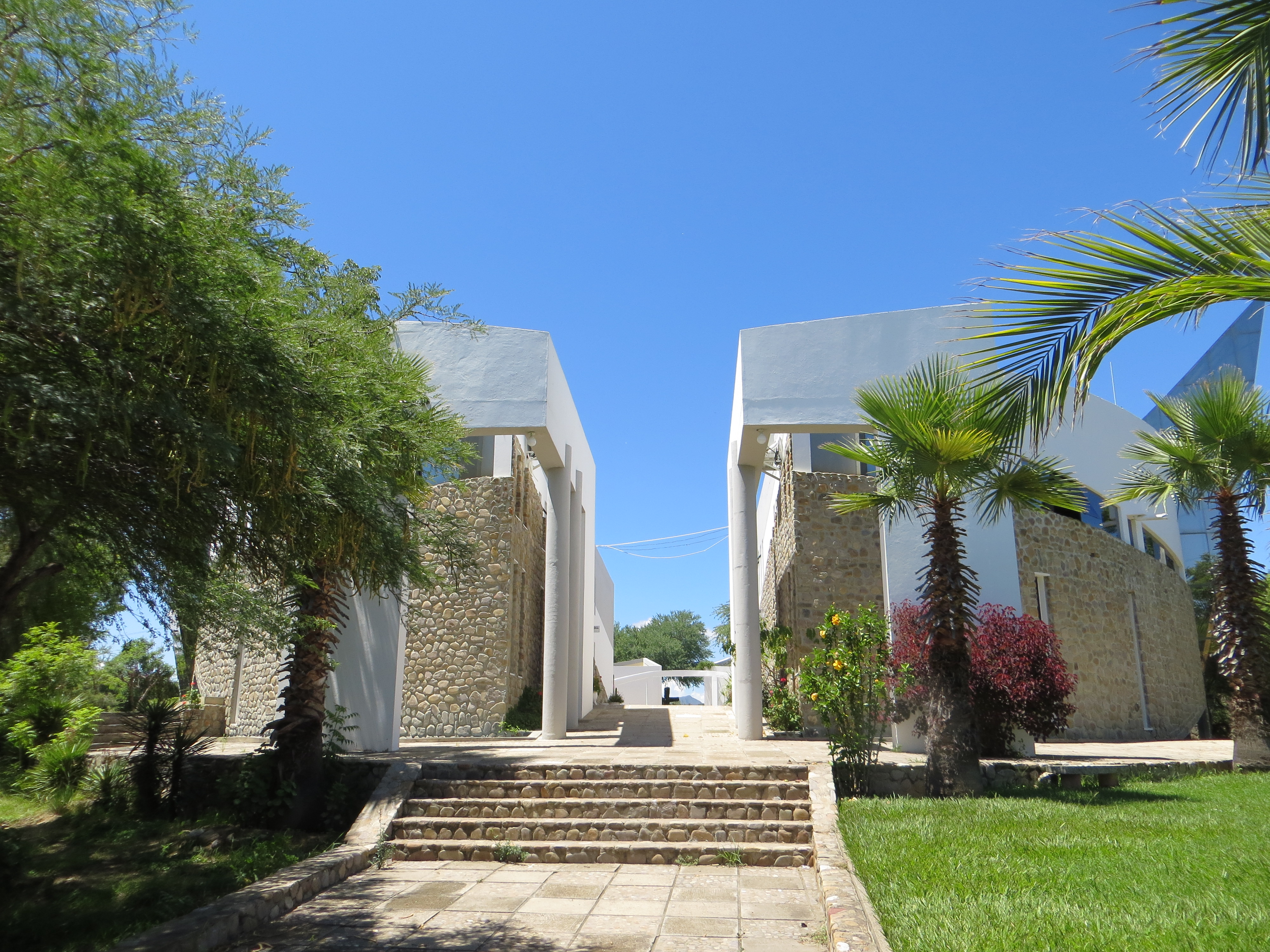
On the outskirts of the city is El Castillo de la Gorietta, a castle lived by Sucre’s only “royal” family. It is easily accessible by bus, paying a mere 1.50Bs for the ride (about 0.30$). It is big and empty inside, with not much explanation presented. I got lost in it quickly, especially with some stairways being blocked. The garden is filled with palm trees where many parrots rest and sing, making it a very serene place. However, it isn’t in harmony with the surrounding buildings. By this I mean that at the end of the garden is a very modern building which I was told is a conference center. On the other side of the river, you also find a military base. The soldiers’ chants mixing in with the parrots singing made for quite an interesting sound.
Feb 24, 2018
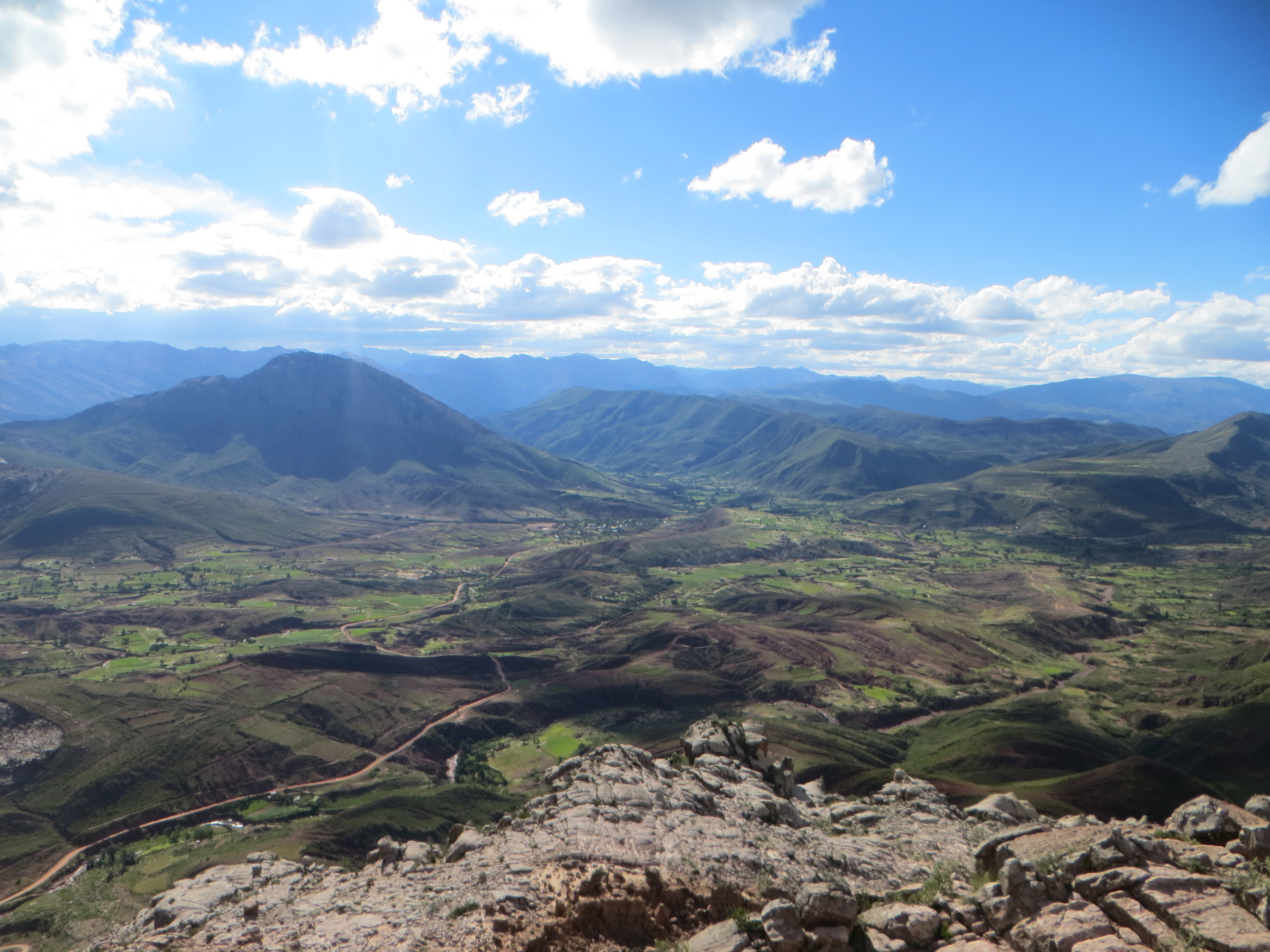
The Maragua Crater is a popular hiking spot which according to Google is an hour and a half drive from the hostel. It is a bit expensive to join an organised tour. I wasn’t planning on going but I met a person from my hostel who had a car and we decided to go there. It took us an hour just to find the road that would lead to the main road. Also, the drive on the unpaved road was very slow. About halfway, we saw a car stopped at the foot of a mountain so we decided to stop there too for a hike instead of going to the crater. It was a nice hike which gave a beautiful view of the city.
Feb 25, 2018
Waterfalls 1 & 2
The next day, I went to Las Siete Cascadas, the 7 waterfalls. The falls are each very small but makes for a nice swim. You start at the bottom, the 1st fall, and climb over each one to get to the next. Again it took me very long time to find the first fall. While walking I got picked up by 2 girls in a taxi who were going in the same direction and dropped me off a few blocks further. I saw some people in a yard and asked for directions. Luckily the guy knew English and pointed me in the right way. It was still a long way up the mountain. When I finally arrived at the falls, I couldn’t figure out how to get past the 3rd fall. At this time, a group of young Bolivians were heading to the 4th fall as well so I followed them and hung out with them there. It seems to be a popular hangout spot for Bolivian families and friends alike. I swam in the pool under the 4th fall. It was very short lived because the water was freezing cold. I was dreading the hike back to the bus stop but I left with the group who showed me a much easier way that I had not read about online.
Feb 26, 2018
My big spending in Sucre was a rock climbing tour. I was the only one who had booked tour so it was more like a private tour. There were 3 walls to climb, each having various difficulties depending on the route to be taken. I was able to mount all except the very last one, either because of sore arms or the difficulty of the climb. For whatever the reason, I will never know.
Other than the activities, Sucre is a very good city to live in because it is big enough to have many restaurants and tourist attractions yet small enough where the people are very friendly. Lunch here is the biggest meal of the day and all restaurants offer set meals. Most nicer restaurant offer 3-course meal for 6$ while local places offer soup and a main for half that price. It would be more than enough to keep me satisfied for most the day, leaving dinner with just some fruit or a sandwich usually. It also helped that the hostel I stayed at had the most amazing and hearty breakfast.
Feb 27, 2018
La paz is the next stop where I shall see if it is just another big city or it has its own charm.
A big tourist attraction in the little visited Bolivia is the Salar de Uyuni or the Salt Flats. I started my 4 day tour in Tupiza, stopping at many breathtaking sceneries along the way before arriving at the main attraction.
Feb 15, 2018
El pueblo fantasmo
The first day of the tour was mostly spent sitting in the car, stopping for lunch and any time we wanted to take pictures of the scenery. We also took a short walk around El Pueblo Fantasma. It is a ghost town, of what used to be an Inca city, now in ruins.
Feb 16, 2018
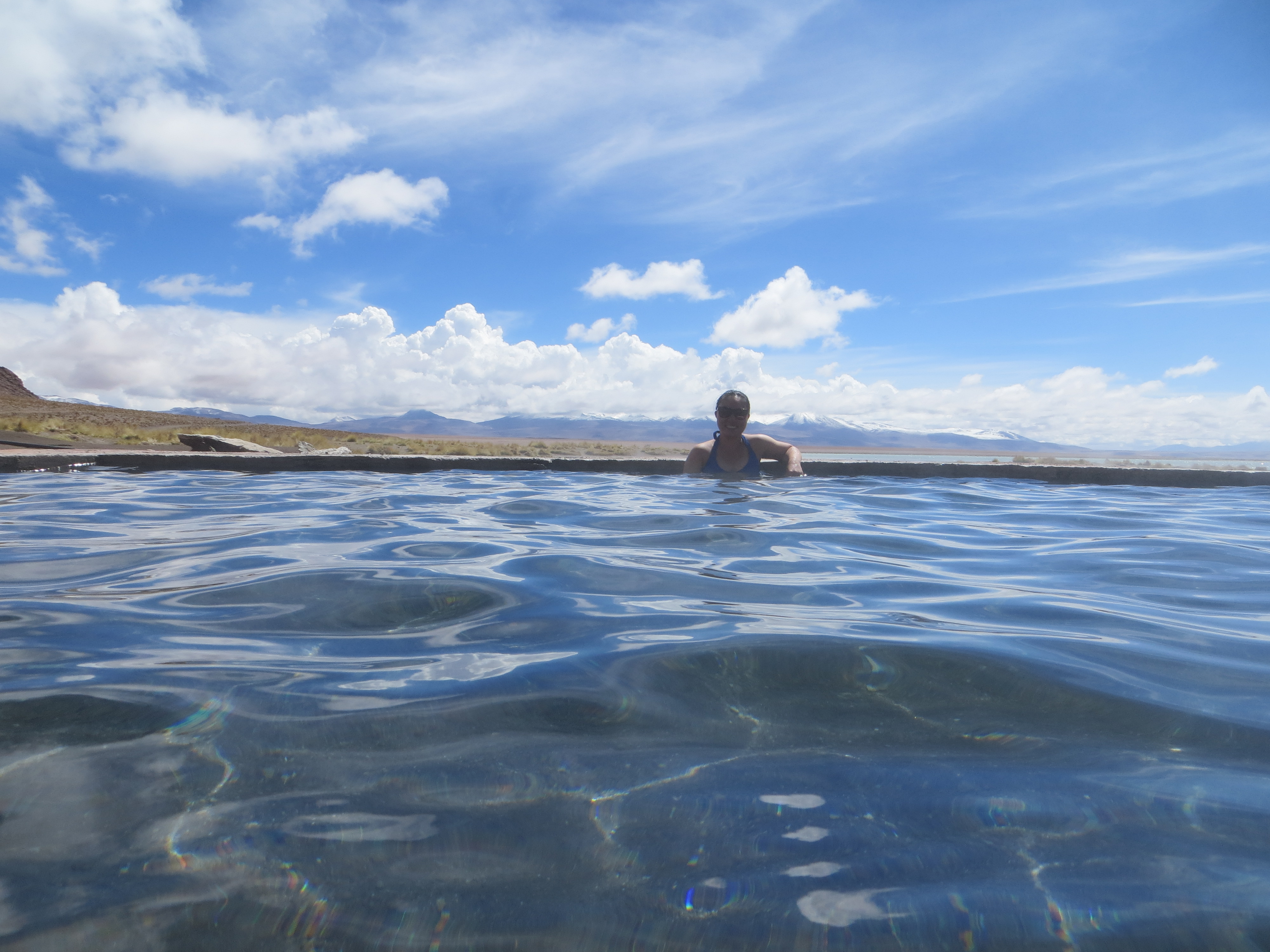
Enjoying hot spring under the blue sky
The 2nd day involved more activities. The first was a short ride away to the hot springs. The view from there was beautiful, with the sun shining bright from a blue sky. Lucky for us, our guides told us to go to the hot springs in the morning since most tourists would arrive in the afternoon. Not only that but while eating lunch at around 1pm, it started pouring. In the afternoon, we stopped at a few lagunas for flamingo watching and to the geisers.
lots of flamingoThe geisers
Feb 17, 2018
Anaconda river
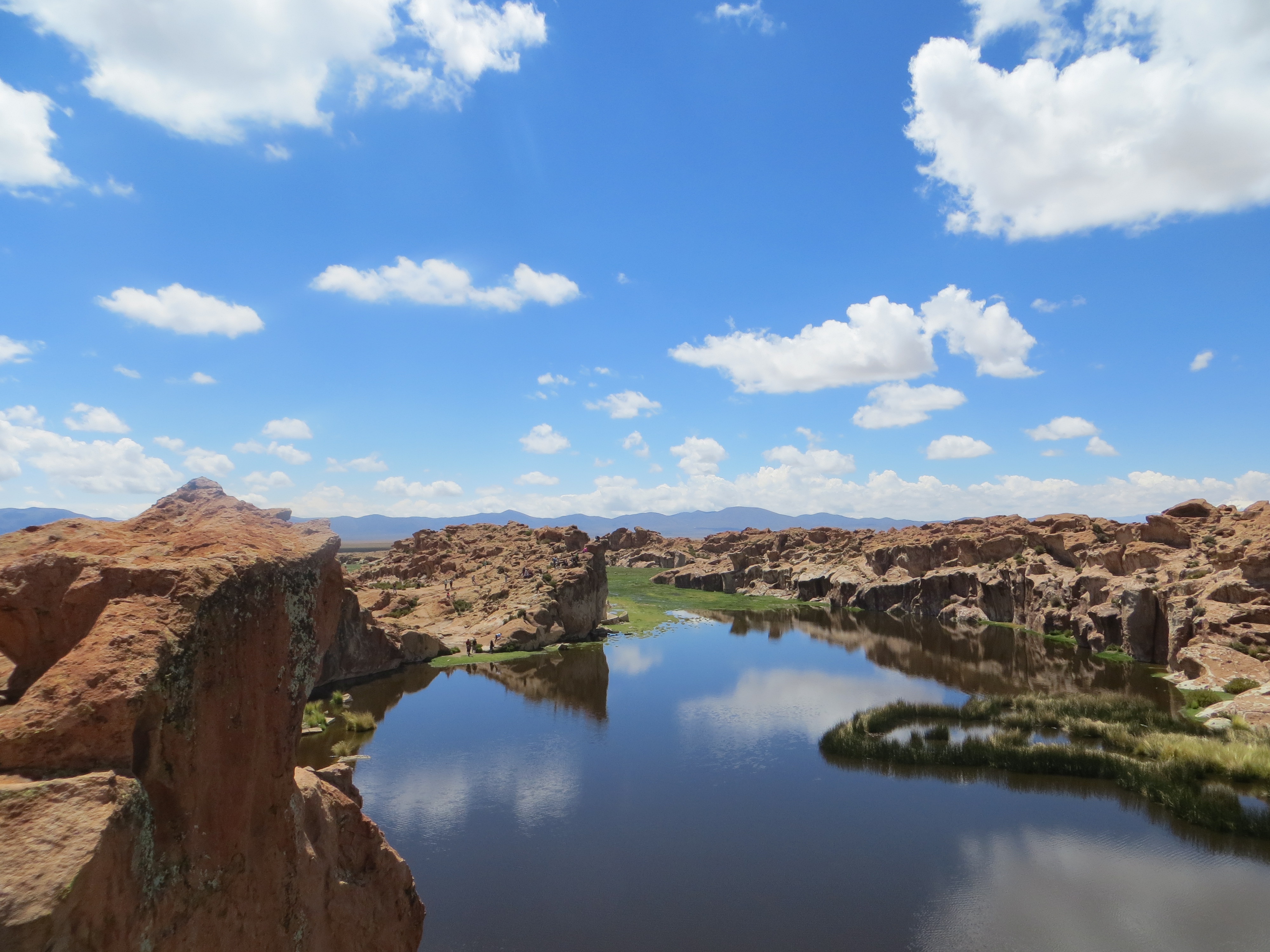
On the 3rd day, we were headed to a desert with lots of rock formations. With your imagination, you could find all types of animals. Climbing these rocks was the activity of the morning. Next, we headed to La Laguna Negra (black) so called because of the fungi in the water making it appear black. We stopped at a viewpoint, allowing a top view of the Anaconda river, before heading to the Salar de Uyuni in the evening, in time for the sunset. We stayed in the town of Colchani for the last night, a mere 30-minute drive to the Salar.
Atop a rock shaped like a camelLa Laguna negraSunset
Feb 18, 2018
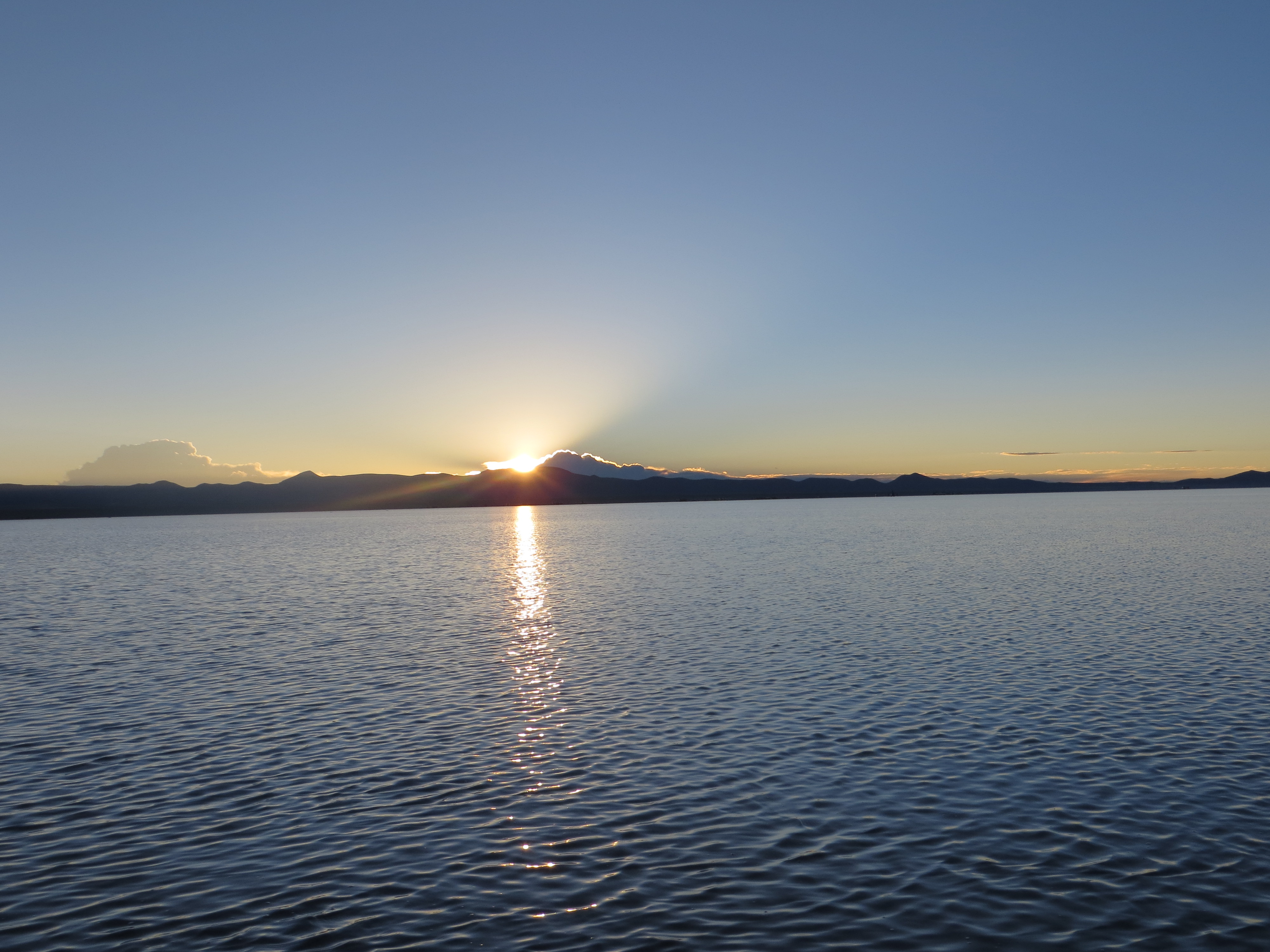
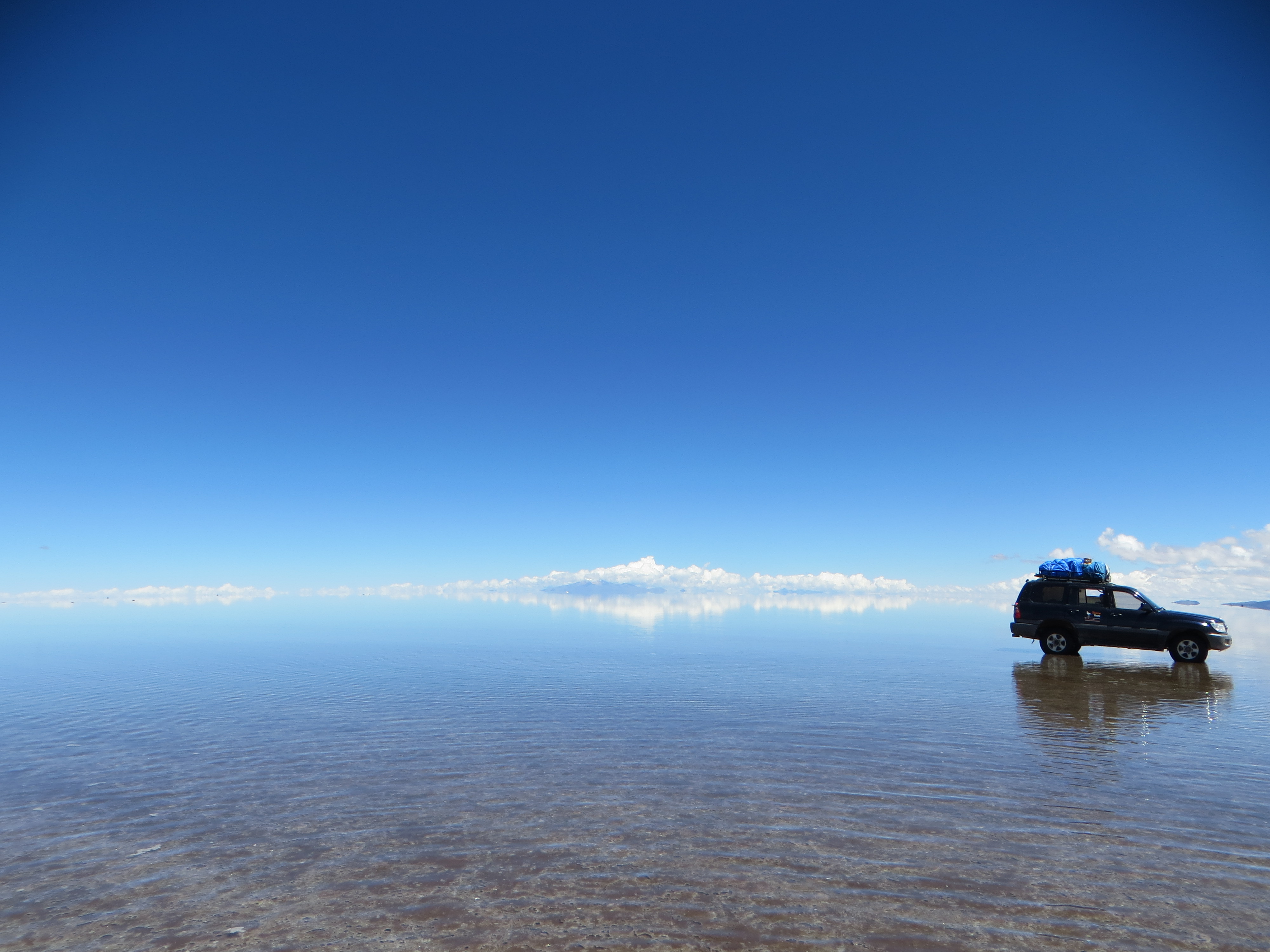
The last day called for a very early wake up to see the sunrise. The best pictures involved getting into the freezing cold water, making our feet numb very quickly. Under the sun’s rays however, the shallow waters warm up quickly. Since it is now the rainy season, the salt flats are filled with water, allowing a mesmerizing mirror effect. The water is clear and shallow enough to still see the salt plates in the shape of pentagons and hexagons. We headed back into the city of Uyuni to end the tour in the afternoon.
SunriseView of the Salar
The guides for the tour were amazing and fully committed. At one point, there was a river to drive through and not knowing the depth of it, the driver waded through the waters. Esther, the cook and English guide for the tour, surprised us with a bottle of wine from her home town of Tarija for the last night’s dinner. Most people on the tour have been travelling for months and kept saying the meals during the tour were the best they’ve had.
All of us in the tour soon parted ways in Uyuni to catch our buses, to La Paz, to Chile and to Sucre for myself. I took the bus with another girl from the tour to Potosi. From there, we got a truffi with some locals to Sucre. Arriving at 1:30 am the following morning, we were exhausted yet delighted to be finally at our destination.
In many countries around the world, carnival is a massive celebration. In Bolivia, it is celebrated throughout several weeks in February. Tarija in particular celebrates friendship and good humor. On the 8th of February, it was the celebration of comadres, meaning women. Men on this day will offer baskets of food to the women they want to seal their friendship with. Groups of women were seen wearing similar outfits and dancing in the streets. By 10am, beer was sold in the streets!
Then, there is a day for the party of the districts. Each district organizes a “barra” where people dance, eat, drink and throw water. This day was Feb 12th this year. I walked around the main plaza during that day and it seemed like the whole town had come out to party. Small children were holding big water guns, spraying anyone who walked by. Others had water balloons or cans of foam. Only women wearing traditional clothing walking the streets were exempt from falling victim to them. Indeed, I got sprayed with water and foam a few times during the day. In the morning, there were large trucks lined up in the streets with massive water tanks spraying people. By the afternoon, the fountain located in the main plaza had run dry from all the kids filling up their water guns or balloons. Around 5pm, the party was over as a group of police officers were chasing people out of the fountain.
Feb 13, 2018
The celebrations are not yet done before the actual day of the carnival with the “challa”, or car, of the house to ensure there will be no problems during the year. This day was also the day I had to take a bus to Tupiza for a tour to the salt flats. I had messaged the bus company previously and they told me the bus would be running on schedule. Upon arrival to the Nueva Terminal de bus, I found myself among many locals waiting around; the bus terminal was closed and no one knew why. In South America, you can catch shared taxis, called truffis, that bring you from one city to the next. Many of these were parked in front of the terminal and locals were slowly getting on to them one by one. I asked many drivers if they were going to Tupiza and they all told me a hard no.
However, I soon met a local woman. My understanding from her saying was that buses were running from another terminal. We hopped into a taxi together and headed to Parada Norte, a much smaller and more run-down bus terminal. Buses were running there and somehow I got my ticket to Tupiza from the same bus company I had originally planned. The normal bus schedule was at 10am but this one was at 11:30am. Among the passengers, there was Esther who was the only person I had met so far fluent in English. She was heading to Tupiza for work as cook and English guide for a salt flats tour. She quickly convinced me to join her tour that was leaving the next day. I had originally booked with another tour company but was told the tour was be postponed because the other people were also having trouble getting to Tupiza.
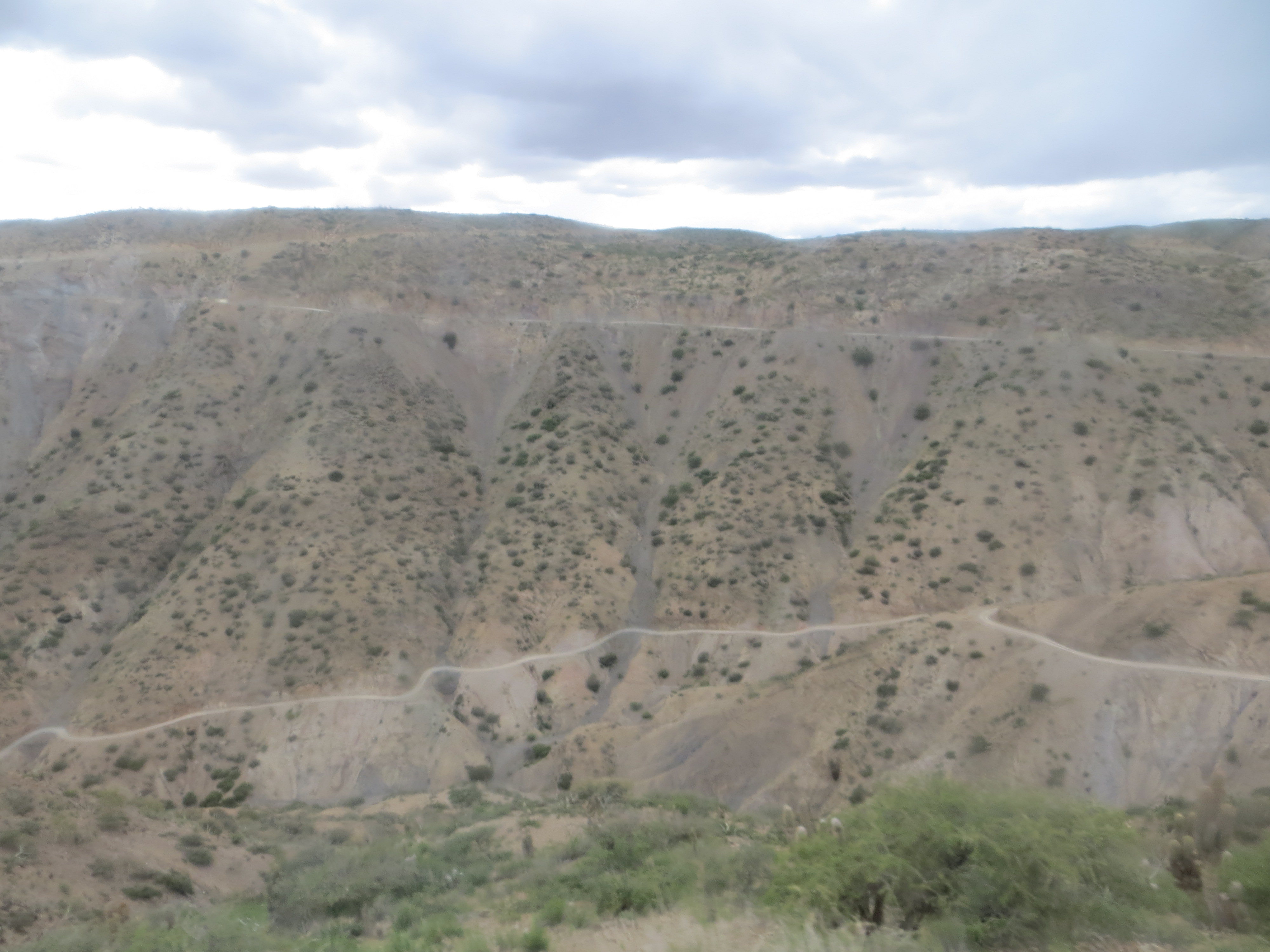
Road on the side of the mountain
Even with unexpected interruptions from the carnival, I arrived at where I needed, joined the tour I wanted and left with the tour on the day I had planned. There were many bumps along the way, and literally too, but it all worked out according to plan. As backpackers say, “It is either a good time or a good story!”
About an hour away from Tarija is a little village in the valley, famously known as valle de Los Condores or Condor Valley. The owners of the tour company, Vincent and Julia, have a farm house there where I spent my 1st night. The view was beautiful, with mountains all around. It was a very relaxed night, with Vincent talking about his life and why he moved from Belgium to Bolivia with his wife. Not only do they run the tours but they also run a school, after school program and a place to live for girls who come from poor or abusive families. Their project is affiliated to an NGO and has now been running for 20 years!
There were 2 cows on the farm which we got to milk. Turns out it is extremely hard to milk them even though Carmen, the cook, made it look so easy. I got to try a cocktail of a hard liquor with sugar, cinnamon and fresh milk that was directly from the cow. The milk being fresh, it was still warm and the cocktail is supposed to be enjoyed warm.
Feb 10, 2018
Cows and calves at camp site
Next day was the hike up the mountain. It was led by a local guide Alex, who was my age. He was extremely nice and always smiling, thoroughly enjoying what he was doing. Along the way, he would point out different plants and of course the condors. It was nice to see that he was just as excited to see the condors as we were! All the way up to the camp site, the weather was perfect as the sun shined brightly. It was lunch time and our camp site being someone’s land for cows, we were shortly joined by a herd of them. There were even 2 baby cows who were around 8 or 9 days old.
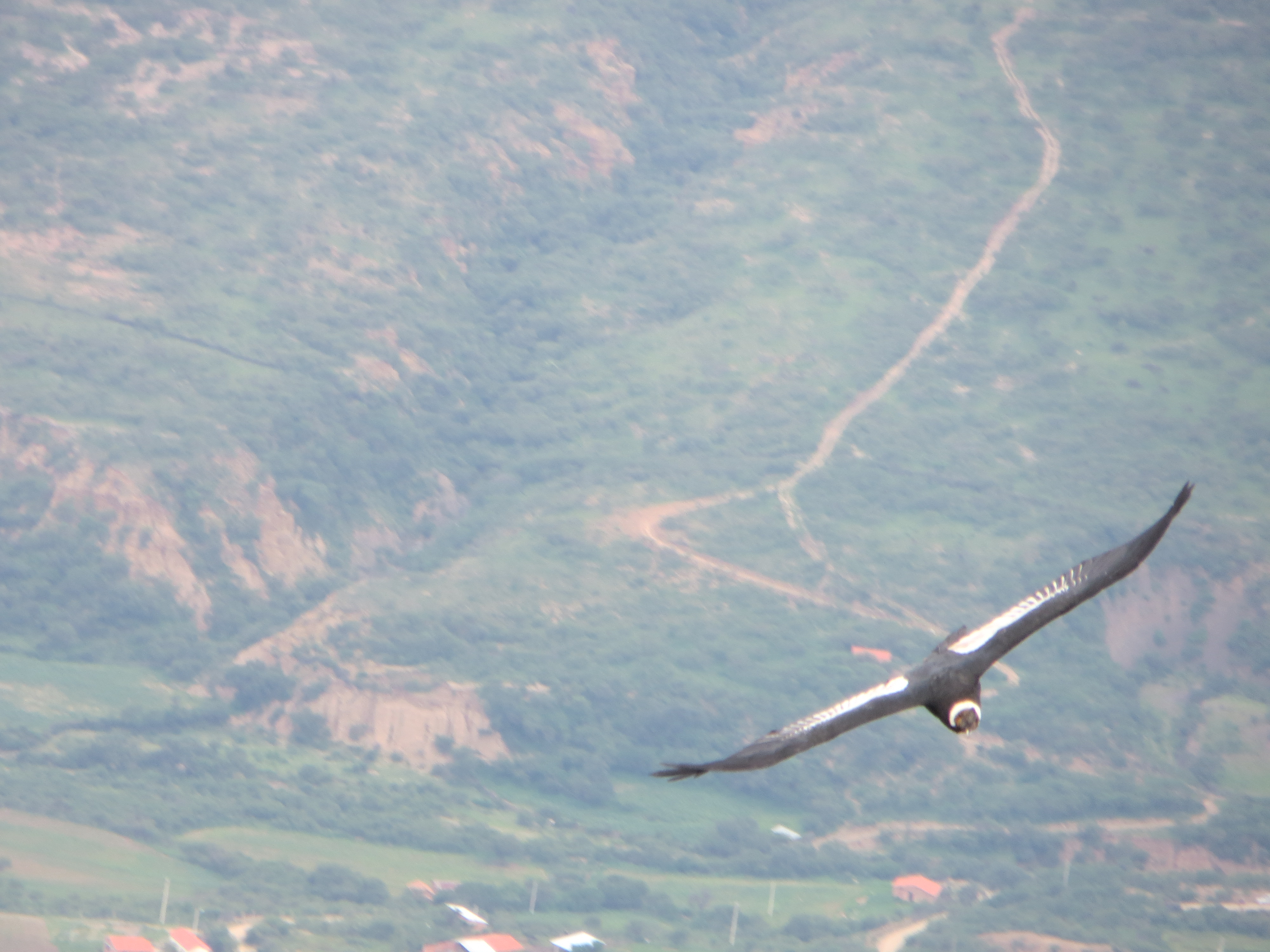
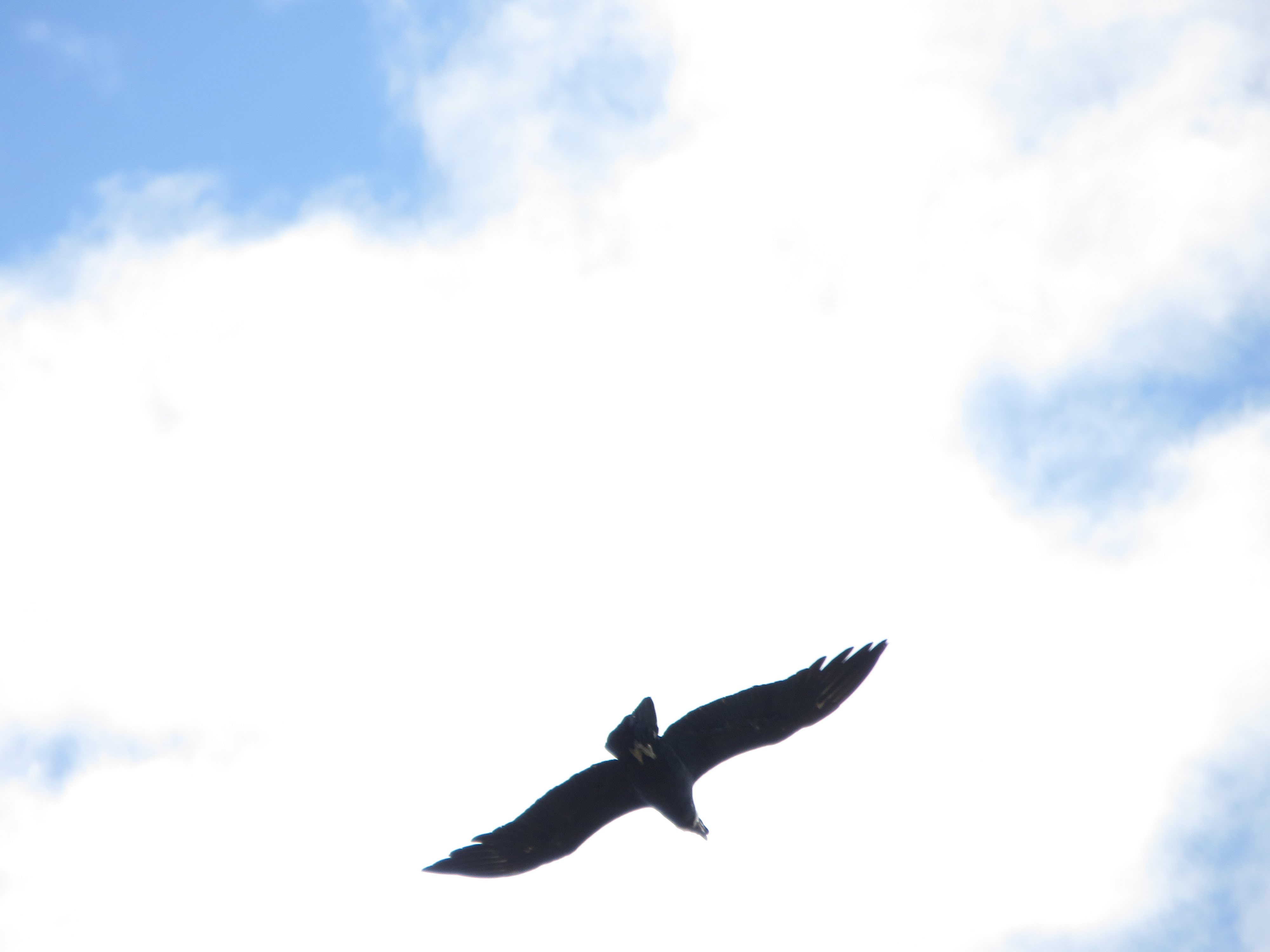
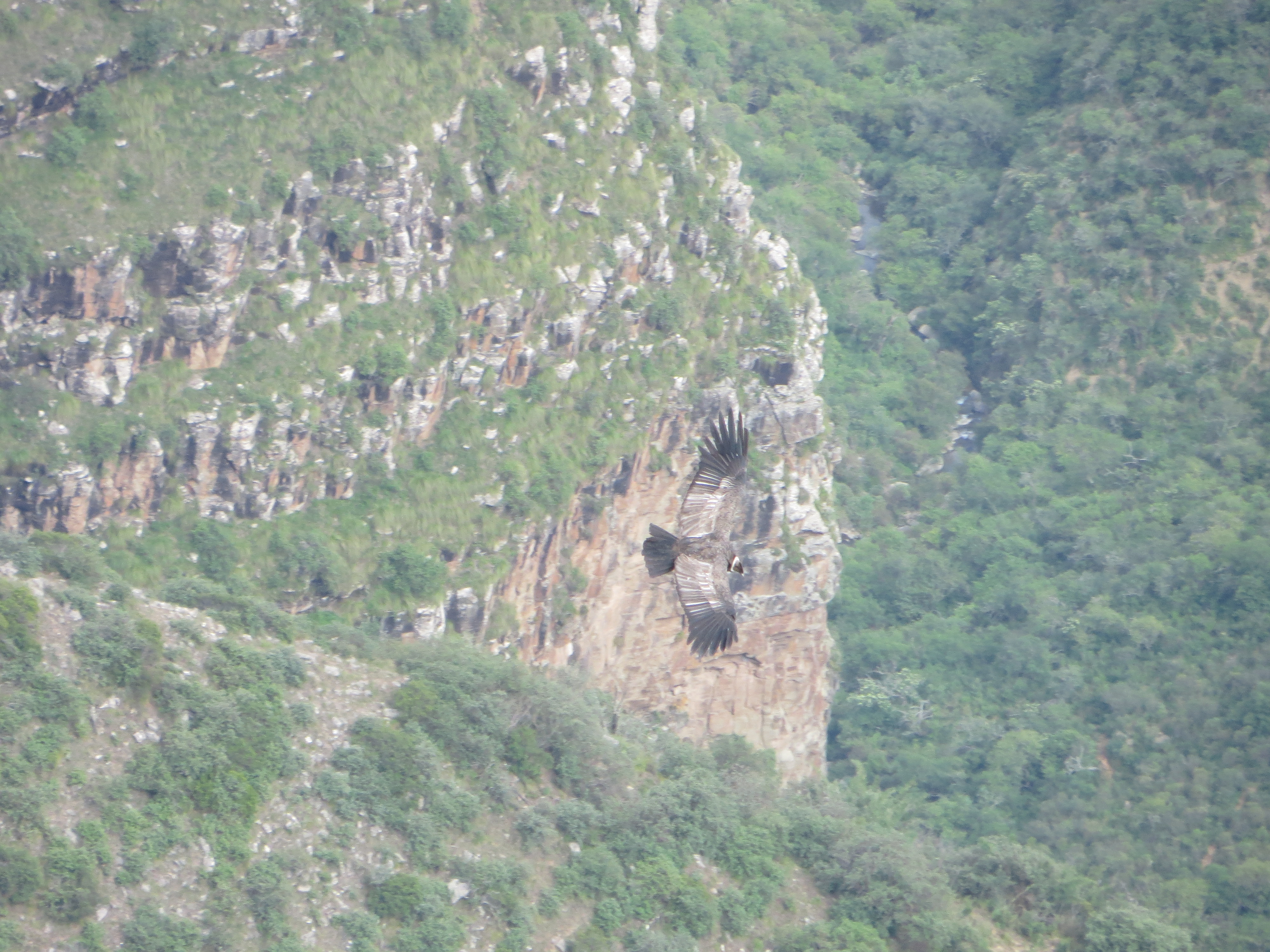
Adult condor
After lunch and mounting the tents, it was time for the next part of the hike up to the top of the mountain. This took another hour and a half to reach the top. However, by the time we had reached the top, it was all foggy and nothing could be seen. When we decided to leave a bit later, everything started clearing up. There were so many condors flying around. They are very curious animals and would fly right above us. With their 3-meter wingspan, we could hear the wind when they flew near enough.
Condor viewed from belowCondor viewed from above
When looking from below, they are all black. When looking from above, some of them are brown while others are white. The colors are for young and adult condors respectively. Male condors also have a crest on its head. There were at least 5 condors flying around and others perched on the cliffs. Alex even laid down pretending to be dead to attract the condors.
Feb 11, 2018
It rained all night and into the morning. This was not unexpected as it was currently the rainy season. We started our hike down in the rain and it stopped shortly after. Sadly, because of the rain, we did not take the trail that passes through a waterfall. It would be very slippery and dangerous so we took the same way that we hiked up from. Once back at the farm house, there was a barbecue before heading back to the city.
I spent my first few days exploring the many parks that the city has to offer. Tarija is divided by a river so I spent one day on one side and the next crossing the river.
Parque de las flores
Parque de Las Flores was my first stop. The park was gated and there was only one entrance to the park which had to be accessed through another gate that led to a set of stairs in between 2 gated areas. The entrance was at the bottom of the stairs. While walking around, I ended up in an outdoor market where many people were selling home hardware. I guess it was their version of a home depot! It was between a few of these stalls, behind a parked truck that I finally found the stairs leading to the park.
bird chirping
The park was beautiful and very quiet. There is a pond with a bridge leading to a gazebo right in the center. Behind it, the name of the park is spelled out with bushes. As the name suggests, there are flowers planted all over the park but much less than I expected. Sitting there under the shade, listening to the birds chirp made a perfect morning.
Next, I walked to what I thought was a park not too far away. In front of the entrance were many locals selling flowers which seemed odd. Looking in through the gates, I realized it was a cemetery that was quite busy so I did not go in. I continued walking and found a little restaurant for lunch.
Mirador Héroes de la IndepenciaView from Mirador
Feb 8, 2019
The next day I went to Mirador Héroes de la Indepencia. It was up a set of stairs, hidden from the main street. This park is very large and because it is higher, gives a wonderful view of the city. Yet again, it was quite empty, with only a few families and others passing by to walk their dogs.
I continued to another plot of green land I found on Google maps. There was no name and required walking through some wealthier areas and more secluded houses. This one was also up a hill. The stairs leading up to the top have stained glass images every few steps depicting a religious scene. Once at the top, there is a beautiful mirror image building with a walking path in between. Again, the path lead to a cemetery, this one a lot more empty and quiet. Further out is another beautiful lookout.
mirror image buildingbeautiful lookout
I headed for lunch at another local restaurant, where I ordered fried fish with rice. It was lunch time and the restaurant being busy, two locals sat at my table. Their lunch entailed drinks only; they were drinking a mixed drink of white wine and cola. Definitely a drink I will have to try for myself at a later date.
It was very nice to see that parks in Tarija are very well maintained. Other small parks and squares around the city were also filled with plants and very clean. Both actual parks that I went to had people working, cutting the grass and bettering the parks. It was also very nice to see that all the round abouts were gorgeously filled with different plants.
Today was the beginning of an annual carnival, a very big celebration here in Tarija that lasts a few days. It will be explained in another post after the festival has ended.
Tarija, like many other small cities I’ve arrived at through the airport, doesn’t have fancy terminals. Instead, stairs are wheeled to the doors and you walk out. They designate the walking path, a few military police giving directions. The second you walk out the plane, you hear the sound of a band playing. Looking down, there is a large crowd, most of whom school children, waving at you; what a great warm welcome!
To get to the city center where my hostel is located, I could either take taxi or bus. Airport taxi costs a whopping 50Bs but if you walk outside of the airport area, taxi only costs around 5Bs. Tarija is a very safe city and nicknamed the capital of smiles so I chose the latter option. However, once outside the airport, I noticed taxis were shared and my Spanish not being the best, I opted to take the bus, a mere 2Bs. Many buses go towards the central plaza so it seemed like a more fool proof option. Buses also have signs posted on the front window indicating where it is headed. There are no designated stops so you wave the bus as you would a taxi.
When you get on the bus, you reach forward while the driver reaches back to hand him the fare. Not knowing this, I got on the bus and sat down, trying to figure out how to pay. The driver didn’t say a word and let me ride. After observing many locals, I finally handed him the money I owed but was never asked for. To get off the bus, either you tell the driver or do it whenever the bus is stopped.
I walked a couple of blocks to the hostel, exhausted from a very long 24hrs spent in planes and airports.
I am currently at Juan Valdez Café in La Paz Airport enjoying a delicious mango juice and what was previously a ham and cheese croissant. Turns out you can pick your juice to either be made in water or milk (Not entirely sure about this since I spoke in English while the waiter replied in Spanish). It also took ordering 2 other drinks before deciding on the mango because as it turns out, there was no cold chai or orange juice. Nevertheless, the juice seems to be made fresh since I hear the blender behind me every few minutes and I get bits of stringiness from fresh mangoes. I also get to use their WiFi which is working very well and one thing I cannot live without.
As for the airport, it seems quite safe considering I just saw 2 policemen walking by carrying a firearm that is prominently visible.
** I wrote this back when I was in La Paz Airport waiting for an afternoon flight to Tarija, my first stop. Turns out I only saved it as a draft without publishing…Still learning how to use this.
Since this is my first post and I honestly have no idea what I am doing; any suggestions or comment for future posts is very welcomed. More pictures, less text, anything. And thanks for reading and following me on my journey! **
 On the border of Peru and Bolivia is Lake Titicaca, a navigable lake at the highest elevation of the world. On the Bolivian side, you access the lake through the town of Copacabana. An hour and a half boat ride will bring you to Isla del Sol or Island of the Sun. The roads are steep there and no cars are polluting the air. I initially planned for a day trip and then bus-ride to my next destination later that day. With bus schedule only allowed an hour on the island, I changed my plan and stayed a night there. During the 1st evening, I hiked around the island, passing a few small Inca ruins along the way. The view from the island was wonderful from all sides albeit a bit windy at the top. Although it was cloudy, the sunset was still beautiful.